


A few months ago we were looking at pipeline data for one of our clients, a B2B SaaS company, mid-market, fairly typical sales motion. We were trying to understand why certain deals were moving faster than others. One of the things that stood out:
Deals where the buyer had already engaged with the CEO's LinkedIn content before the first sales conversation tended to close faster, roughly 20% faster in the cases we could actually track.
I want to be careful about what that does and doesn't mean. It's tempting to say "the content closed the deal faster." More likely, it's partly the reverse. Buyers who go and read the CEO before a call are already more engaged, further into their own research, more serious.
The content didn't manufacture the intent so much as reflect it, and probably reinforced it. We can't fully separate the two. But the direction held across accounts, and it points at something real: by the time a serious buyer talks to your rep, they've already formed a view of your company. Increasingly, that view is shaped in a channel your sales team can't see.
If your CEO has been posting consistently on LinkedIn for six months or more, there is a body of content out there that your buyers are already reading.
They're often not liking it. They're not commenting. When we interview buyers after a deal, a version of the same thing comes up again and again: they'd read the founder's posts, forwarded one or two to a colleague, and used them to decide whether the company actually understood their world, all without ever leaving a trace on the post itself. By the time they get on a call, they'd already formed an opinion about the companyandwhether the conversation was worth their time.
The problem is that most sales teams have no idea this is happening. They treat the CEO's LinkedIn as a marketing thing. Something that happens in a different department, tracked in different dashboards, reported in different meetings. It doesn't show up in Salesforce. It doesn't appear in the sequence data. So as far as sales is concerned, it doesn't really matter.
But it does. And the sales teams that figure out how to activate it, rather than just letting it happen passively, get a measurable edge.
The buyer journey in B2B has a phase that almost no one maps properly. Gartner calls it the independent research phase: the stretch before a buyer ever raises their hand, when they're building a picture of the market and the players in it on their own.
Gartner's research makes the scale of this hard to ignore. B2B buyers now spend only about 17% of the entire purchase journey meeting with potential suppliers, and when they're comparing several vendors, that sliver gets split across all of them, so any single vendor might get a handful of percentage points of direct contact. The overwhelming majority of the journey is self-directed. During that window, buyers are reading. And what they're reading, increasingly, is the people behind the companies they're evaluating. https://www.gartner.com/en/sales/insights/b2b-buying-journey
Three things happen in this phase that matter for sales:
None of this generates a touchpoint in your CRM because these are invisible signs. But it's doing real work.
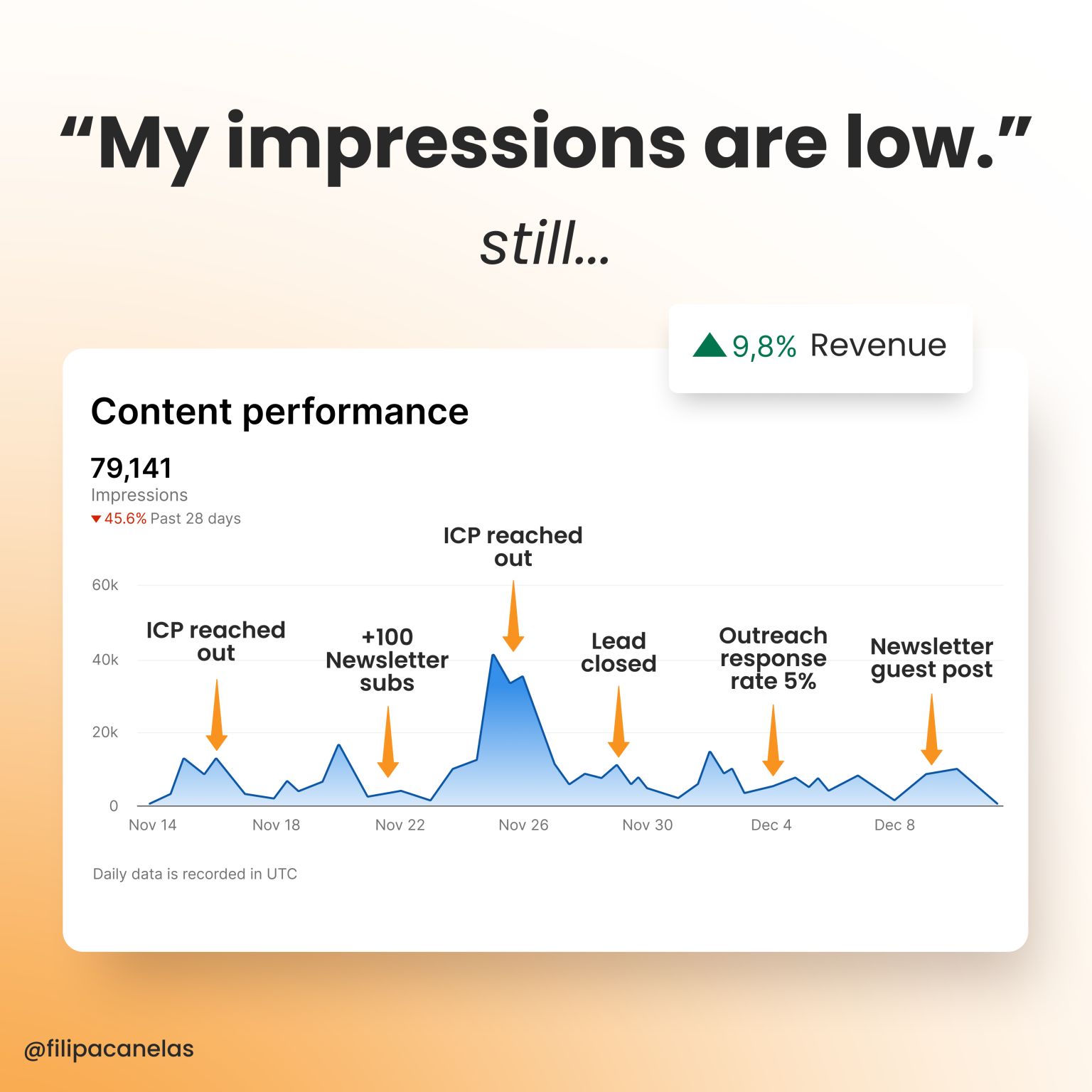
Most sales teams are passive beneficiaries of whatever the CEO posts. The ones getting the most out of it are doing something more deliberate.
1. Pre-call research using CEO content as a signal
Before reaching out to an account, check whether anyone at that company has engaged with the CEO's recent posts. Likes, comments, and shares are publicly visible. An account where multiple people have engaged with CEO content is warmer than one that hasn't, and that should change how the rep approaches the outreach.
This also works the other way: when a prospect books a demo or responds to an SDR sequence, the rep can check whether they've previously engaged with CEO content. If they have, the rep knows the buyer is further along in their research than the CRM suggests.
2. Featured section as a passive sales tool
Iwrote about a tactic a marketing lead at one of our clients came up with: asking every salesperson on the team to add the founder's top-performing posts to the Featured section of their own LinkedIn profile.
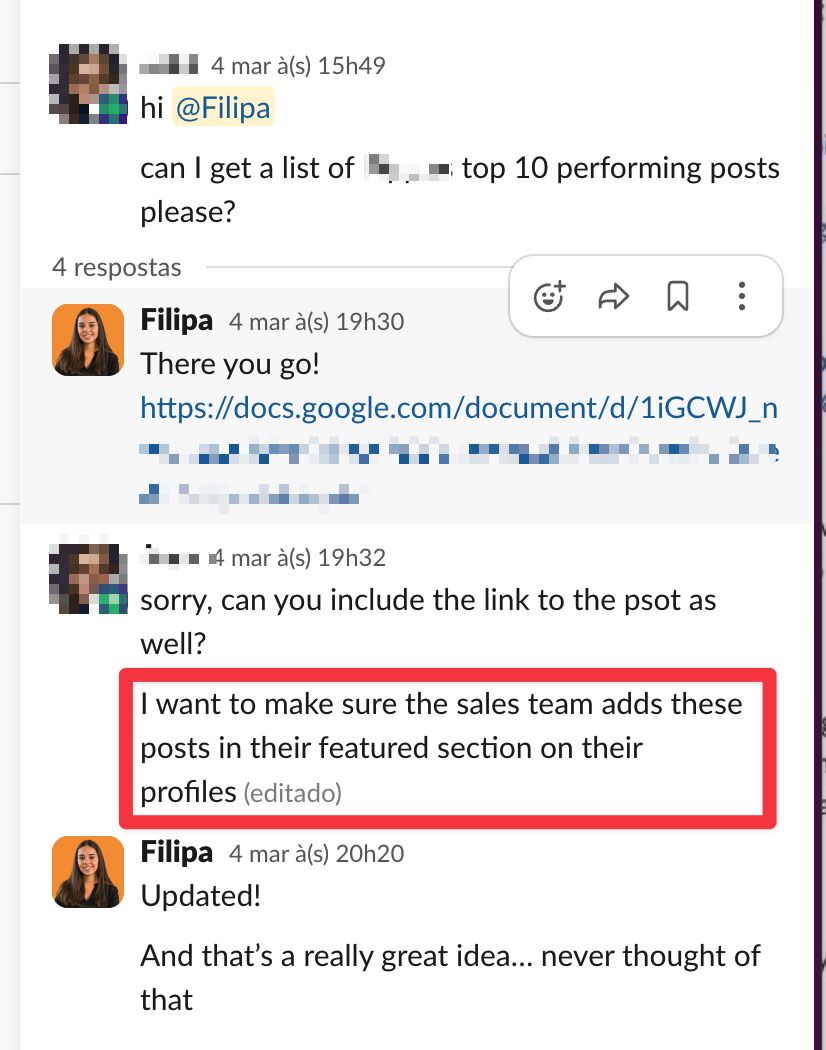
The logic is clean. Most buyers look at the LinkedIn profile of the rep who reached out before deciding whether to reply. The Featured section is prime real estate. Instead of leaving it empty or filling it with a product page, you put the CEO's best content there. Content that demonstrates expertise, earns trust, and covers the credibility gap that every salesperson faces when they reach out cold.
The rep doesn't need to post anything. They just need to surface what already exists.
3. Account-based content activation
For accounts in an active sales cycle, the CEO's content can do pre-meeting and post-meeting work without the CEO being in the room.
Before a meeting: if the CEO has published content directly relevant to the prospect's situation such as a post about a problem they're wrestling with, a case study from a similar company, a take on a shift in their industry, the rep can share it as part of the pre-meeting communication. It frames the conversation before it starts.
After a meeting: when a prospect raises an objection or asks a question the CEO has addressed in a post, the rep can follow up with that specific piece: "I thought of this when you mentioned X" is a very different message to "here's our product overview."
This only works if the sales teamactually knows what the CEO has published, which brings us to the infrastructure question.
Across the CEO brands we've built at mktk, the numbers that consistently move are:
None of this works if the CEO's LinkedIn is an afterthought. For sales teams to be able to activate it, three things need to exist, and they're more concrete than they perhaps sound.
When those are in place, the CEO's content stops being a marketing responsibility and starts being a shared asset. Marketing produces it. Sales activates it. The CEO approves it in fifteen minutes a week.
The founder doesn't need to jump on every sales call. They already showed up in the feed, months ago, while the buyer was doing their research quietly. By the time the rep sends the first email, the introduction has already been made.
.svg)